When to Replace Your Tires and How to Compare Prices
How to tell when tires are worn out or too old, how to read the sidewall, and what to compare in tire quotes beyond the price per tire.
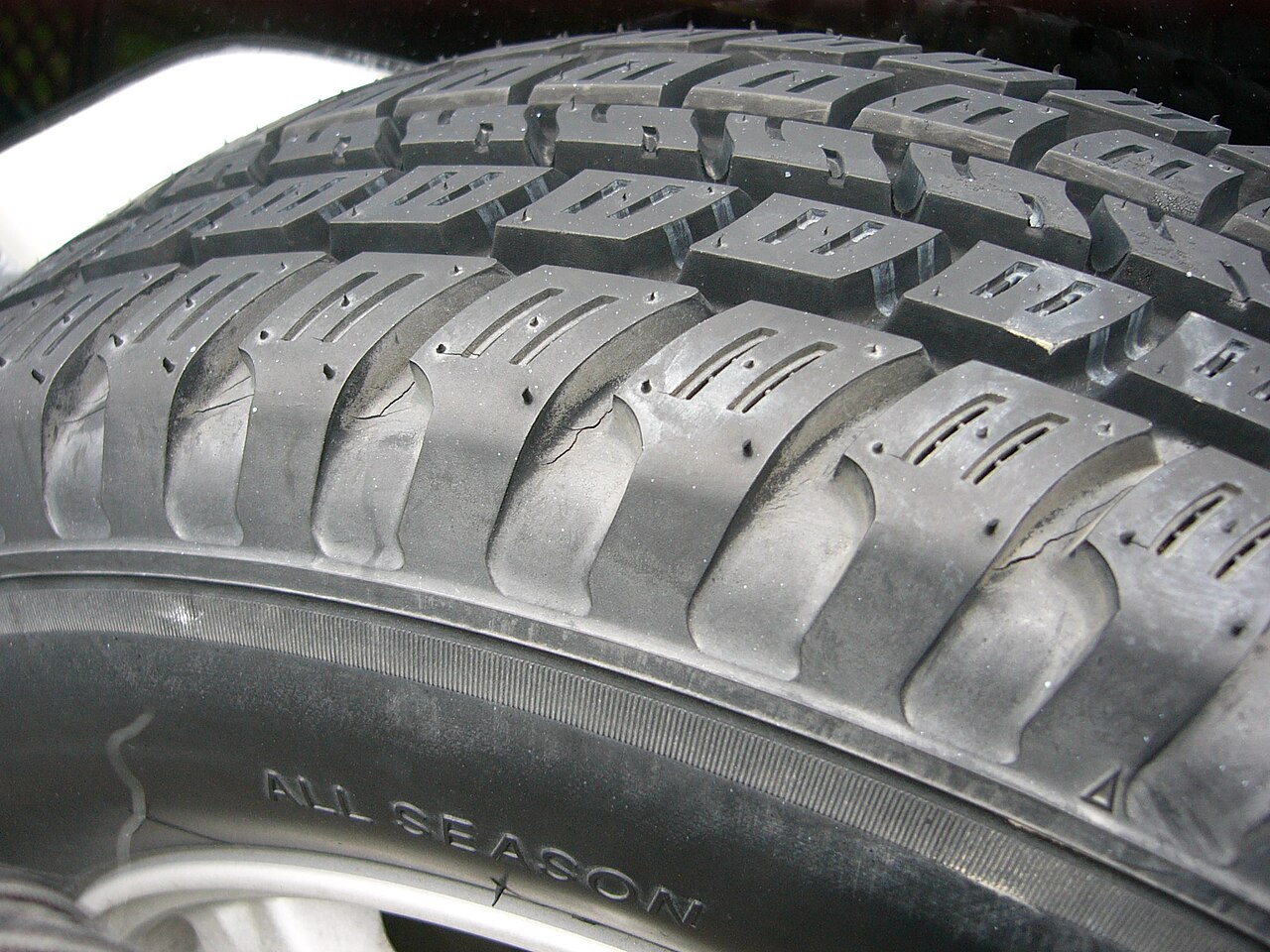
Tires are the only part of a car that touches the road, so their condition affects braking, steering and how the car handles in rain and snow. Yet tires wear slowly, and it is easy to keep driving on a set long after it should have been replaced.
Buying new tires raises its own questions. Prices for what looks like the same tire can differ a lot from one shop to another, partly because quotes include different services and fees. This guide covers how to check tread and age, how to read the information on the sidewall and how to compare quotes on equal terms.
Signs your tires need replacing
Tread worn to the limit
The National Highway Traffic Safety Administration (NHTSA) says tires are not safe and should be replaced when the tread is worn down to 2/32 of an inch. There are two easy ways to check:
- Treadwear indicators. Tires have raised bars molded into the bottom of the tread grooves. When the tread is level with these bars, it is time for new tires.
- The penny test. Place a penny in the tread with Lincoln's head upside down and facing you. If you can see the top of his head, replace the tire.
Check several spots across each tire, including the inner and outer edges, because tires often wear unevenly. NHTSA suggests checking tread at least once a month, at the same time you check tire pressure.
Damage and uneven wear
NHTSA also lists physical damage as a reason to stop using a tire: cuts, cracks and bulges in the sidewall or tread. Uneven wear deserves attention too. Wear on both edges often points to underinflation, while wear on one edge can mean an alignment problem. Replacing the tires without fixing the cause usually means the new set wears out early as well.
Other warning signs include new vibration and a tire that keeps losing air. All passenger cars, light trucks and vans from model year 2008 or newer have a tire pressure monitoring system, but NHTSA notes that it warns only when a tire is significantly underinflated, so a monthly check with a gauge is still worthwhile.
Age, even with good tread
Rubber breaks down over time, whether or not the tire is used much. NHTSA says you cannot detect tire aging just by looking, and that some vehicle and tire manufacturers recommend replacing tires that are six to 10 years old regardless of tread. Your owner's manual or the tire maker can tell you what applies to your tires. This matters most for cars driven very little and for spares.
How to read the sidewall
- Size. A code such as P215/60R16 gives the tire's width in millimeters, its sidewall height as a percentage of that width and the wheel diameter in inches. Buy the size on the Tire and Loading Information label on the driver's door edge or in the owner's manual, or another size the vehicle manufacturer recommends.
- DOT Tire Identification Number. The last four digits show the week and year the tire was made. For example, 2324 would mean the 23rd week of 2024. NHTSA recommends checking this date when you buy tires. The full number may be printed on only one side.
- Uniform Tire Quality Grading (UTQG). Most passenger tires sold in the U.S. carry three grades on the sidewall, assigned by the manufacturer under federal rules:
| Grade | What it measures | How to read it |
|---|---|---|
| Treadwear | Relative wear rate compared with a test tire | Higher numbers should last longer; a 400 should wear about twice as long as a 200 under the same conditions |
| Traction | Straight-line stopping on wet pavement | AA, A, B or C, with AA the highest |
| Temperature | Resistance to heat buildup | A, B or C, with A the highest |
These grades are useful for comparing tires against each other, but actual tread life depends on your driving, roads, climate and maintenance.
Choosing the right type
NHTSA describes the main categories this way: all-season tires handle a variety of conditions and have some mud and snow capability; winter tires are more effective in deep snow; summer tires are not designed for freezing temperatures, snow or ice; and all-terrain tires are mostly used on four-wheel-drive vehicles that see some off-road driving.
Some all-wheel-drive vehicles are sensitive to differences in tread depth between tires. If you plan to replace only one or two tires, check the owner's manual first.
How to compare tire prices
The price per tire is only part of the cost. Before comparing quotes, ask each shop for an "out-the-door" price for the same tire model and size, and find out what it includes:
- Mounting and balancing. NHTSA says new tires should always be balanced when installed.
- Valve stems or tire pressure sensor service kits.
- Disposal of old tires. Shops often charge a disposal fee, and some states add their own fee on new tires. California, for example, collects a per-tire fee at the time of sale.
- Wheel alignment, which is usually a separate charge but may be recommended if your old tires wore unevenly.
- Road hazard coverage or extended warranties, which are optional. Read what they cover before paying for them.
- Taxes.
Also compare the tire manufacturer's treadwear warranty, if any, and what you need to do to keep it valid, such as regular rotation and keeping records.
Questions to ask before you buy
- What is the total out-the-door price for all the tires, installed?
- When were these tires made? Can I see the DOT date code?
- Does the price include balancing, valve stems, disposal and any state fees?
- Do you recommend an alignment, and why?
- What warranty comes with the tires and the installation?
- Will you register the tires with the manufacturer so I get recall notices?
Registering your tires matters because manufacturers use registration lists to contact owners directly about recalls. Federal rules require tire makers to provide registration forms to the dealers that sell their tires. You can also look up tire recalls at NHTSA.gov/recalls.
The bottom line
Replace tires when the tread reaches 2/32 of an inch, when you see cuts, cracks or bulges, or when they are old enough that the manufacturer recommends replacement. When you shop, compare total installed prices for the same tire, check the date code and make sure the new tires are registered. Regular pressure checks, rotation and alignment will help the next set last longer.