Why Your Car's AC Is Blowing Warm Air
The common reasons a car air conditioner stops cooling, what you can safely check yourself and what to ask a repair shop.
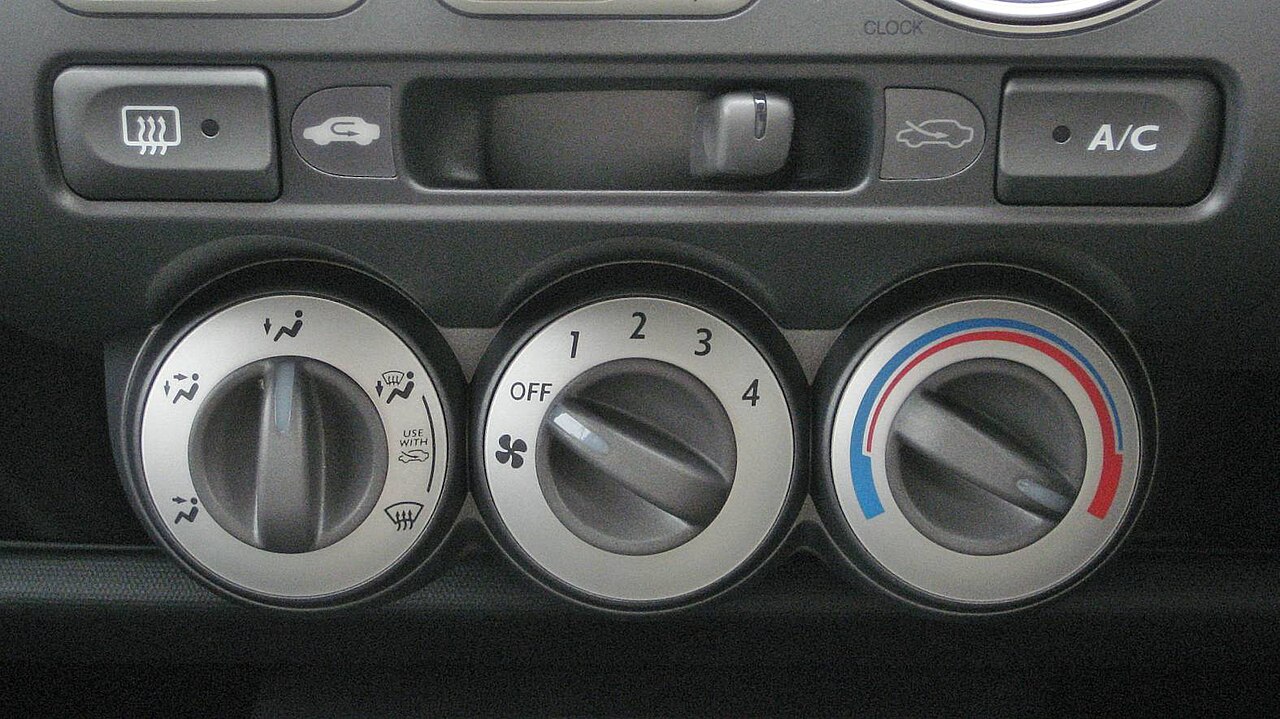
Turning on the air conditioning and getting warm air from the vents is one of the most common car complaints in hot weather. Sometimes the cause is minor, like a clogged filter or a blown fuse. Other times it points to a refrigerant leak or a failing compressor, which needs professional repair.
This guide explains how the system works, the main causes of warm air, the checks you can do without tools and the questions to ask before you approve a repair.
How a car's air conditioning works
A car AC system moves heat out of the cabin rather than creating cold air. A compressor, driven by the engine belt or by an electric motor in many hybrids and electric vehicles, pressurizes a refrigerant and pumps it through a closed loop. The refrigerant releases heat at the condenser, a radiator-like part at the front of the car, and absorbs heat from cabin air at the evaporator behind the dashboard, where a blower pushes the cooled air out of the vents.
Because it is a sealed loop, a problem anywhere along it can stop the cooling.
Common reasons the air is warm
Low refrigerant from a leak
An AC system is sealed, so it does not consume refrigerant in normal use. A low level almost always means some escaped through a seal, hose, fitting, the condenser or the evaporator. A slow leak usually shows up as cooling that gets a little weaker over time rather than failing all at once.
The compressor is not engaging
Many compressors use an electromagnetic clutch that engages when you turn on the AC. If the clutch, its fuse or relay, a pressure switch or the wiring fails, the compressor will not run and the system cannot cool. Very low refrigerant can also keep a pressure switch from letting it engage.
Condenser or cooling fan problems
The condenser needs strong airflow to release heat. Debris packed into its fins, physical damage or an electric cooling fan that is not running can all reduce cooling. A common clue is AC that works on the highway but blows warm air at stoplights or in slow traffic.
Blend door or climate control faults
Inside the dashboard, a small door mixes heated and cooled air to reach the temperature you set. If the motor that moves it (often called a blend door actuator) fails, the system may send heated air to the vents even while the AC is running. Air that stays at one temperature no matter how you set the controls is a typical sign of this.
Restricted airflow
A clogged cabin air filter does not usually turn cold air warm, but it can make the airflow so weak that the car never cools down on a hot day.
What you can safely check yourself
None of the following involves opening the refrigerant system, and together they can narrow the problem down before you pay for diagnosis:
- Rule out the controls. Confirm the AC is actually on and the temperature is turned all the way to cold. On automatic systems, change the set temperature and see whether the air changes at all.
- Watch the compressor engage. With the car parked and idling, have a helper switch the AC on while you keep your hands clear of belts and fans. On cars with a compressor clutch, the center of the compressor pulley should start to spin. Some newer compressors have no clutch, so this check does not apply to them.
- Look through the grille. A condenser matted with leaves or bugs, or an electric fan that never starts while the AC runs, would explain warm air at idle.
- Inspect the cabin air filter. On many cars it sits behind the glove box. A clogged one mainly weakens airflow.
- Check the AC fuse. The fuse box diagram in the owner's manual identifies it.
- Keep a short log. Note when the air turns warm and under what conditions, so a shop can narrow down the cause faster.
About recharge kits and refrigerant rules
Store-bought recharge kits are common, but they have limits. The U.S. Environmental Protection Agency (EPA) notes that topping off or recharging should improve cooling, yet neither permanently fixes a leak. Because no one can tell at the start how much refrigerant is left, a top-off can leave the system undercharged or overcharged, and both hurt performance. EPA says that repairing or replacing the leaking parts, done properly, gives longer-lasting results.
Refrigerant is also regulated:
- Venting is prohibited. Under the Clean Air Act, it is illegal to intentionally release refrigerant into the air while servicing or disposing of a vehicle AC system.
- Paid work requires certification. Anyone who services a vehicle AC system for payment must be certified under Section 609 of the Clean Air Act and use approved recovery equipment.
- Refrigerants are not interchangeable. Many vehicles built in the past few decades use R-134a, and many newer models use R-1234yf. Each refrigerant has its own service fittings to prevent mixing, and EPA says adapters should not be used to get around them. Mixing refrigerants can cause high pressures, component damage and safety hazards. Check the label under your hood or your owner's manual to see which refrigerant your car uses.
- State rules can add more. California, for example, requires small cans of automotive refrigerant sold there to have a self-sealing valve so unused refrigerant does not escape.
Questions to ask the repair shop
- Are your technicians certified under EPA Section 609?
- What tests did you do to find the cause, such as pressure readings, a leak test with dye or an electronic detector, or electrical checks?
- Where is the leak, and does the estimate include fixing it or only recharging the system?
- What refrigerant does my car use, and is its cost listed separately?
- Does the repair come with a warranty on parts and labor?
Repair costs vary widely, from a fuse or filter to a compressor or evaporator replacement that means taking apart part of the dashboard. A written estimate naming the failed part and the test results makes quotes easier to compare.
The bottom line
Warm air from the vents usually comes down to one of a few causes: a refrigerant leak, a compressor that is not engaging, a condenser or fan problem, or a fault in the controls behind the dashboard. Simple checks like settings, fuses, the cabin filter and the condenser are safe to do yourself. For anything involving refrigerant, a certified technician who finds and fixes the leak gives you a repair that lasts longer than a top-off.