Why Replacing a Water Heater Costs More Than the Tank Itself
What goes into a water heater replacement quote, from labor and permits to code updates, why two quotes can differ so much and how to compare them.
A water heater is one of those appliances most people never think about until it stops working. Then the questions arrive all at once: should it be repaired or replaced, which type should go in, and why is the installation quote so much higher than the price of the unit you saw at the hardware store?
The short answer is that the tank or the tankless unit is only one part of the job. Labor, permits, code updates, venting, disposal of the old unit and the condition of the space all affect the final number. Knowing what each of those pieces is makes it much easier to read a quote, compare contractors and decide whether an upgrade is worth it.
Repair or replace?
Not every problem means a new water heater. A failed heating element, a faulty thermostat, a worn anode rod or a pilot light that will not stay lit can often be fixed for a fraction of the cost of replacement. A plumber can usually tell you within one visit.
Replacement tends to make more sense when:
- The tank is leaking. Water around the base of a tank-style heater often means the tank itself has corroded, which cannot be repaired.
- The unit is old. Tank water heaters commonly last somewhere around 10 years, sometimes longer, depending on water quality, the type of unit and maintenance. Past that point, repeated repairs can add up quickly.
- Hot water runs out much sooner than it used to, or the water looks rusty, and flushing the tank has not helped.
- Your household needs have changed, for example after adding a bathroom or more people moving in.
What a replacement quote usually includes
The unit
Prices vary by type, capacity, fuel and efficiency rating. A basic tank model costs less than a high-efficiency or heat pump model, and tankless units sit in a different price range altogether. Capacity matters as well: a larger household may need a bigger tank or a higher flow rate.
Labor
Installation typically involves draining and disconnecting the old unit, carrying it out, setting the new one, connecting water lines and the gas or electric supply, and testing everything. A straightforward swap of the same type in the same spot is the simplest job. Labor rates depend heavily on your region and on how easy the space is to reach: an attic or a tight closet takes longer than an open basement.
Permits and inspection
Many cities and counties require a permit to replace a water heater, especially gas models, because a poor installation can create a risk of fire, flooding or carbon monoxide. The permit fee and an inspection visit are often built into a professional quote. A quote without a permit can look cheaper, but it may cause problems when you sell the home or file an insurance claim.
Bringing the installation up to code
Building codes change, and an old installation that was acceptable 15 years ago may need updates now. Common examples include:
- seismic straps in earthquake-prone areas;
- a drain pan and a drain line where a leak could damage the floor below;
- a properly sized temperature and pressure relief valve and discharge pipe;
- an expansion tank on some water systems;
- updated venting for gas units.
These items are a common reason why two quotes for "the same water heater" differ.
Switching types
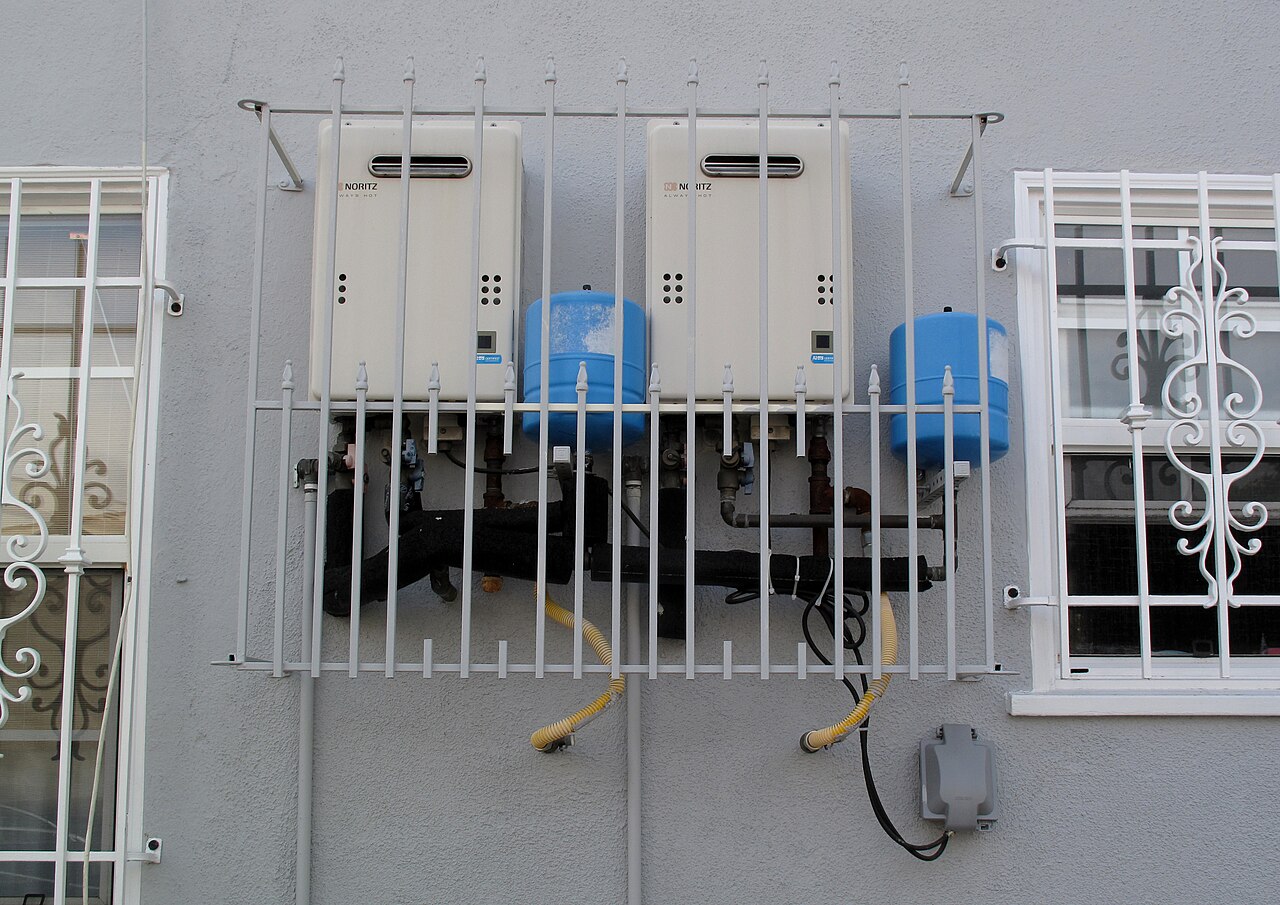
Moving from a tank to a tankless model, or from gas to a heat pump water heater, usually adds work. A tankless gas unit may need a larger gas line and new venting. A heat pump water heater needs enough surrounding air space, a condensate drain and often a dedicated electrical circuit. That extra work can make the first year expensive even if the new unit saves energy over time.
Haul-away and cleanup
Removing and disposing of the old tank is often included, but not always. It is worth checking.
Comparing the main types
| Type | How it works | Typical trade-offs |
|---|---|---|
| Gas or electric tank | Keeps a tank of water hot at all times | Lowest upfront cost; standby heat loss; limited by tank size |
| Tankless (on-demand) | Heats water as it flows through | Endless hot water within its flow rate; higher upfront and installation cost |
| Heat pump (hybrid) | Moves heat from surrounding air into the tank | Very efficient electric option; needs space and suitable room temperature |
Efficiency is measured by the Uniform Energy Factor (UEF), which is listed in the manufacturer's specifications and in ENERGY STAR product listings. The yellow EnergyGuide label shows an estimated yearly energy cost instead. A higher UEF means lower operating costs for the same amount of hot water, although how much you save depends on local energy prices and how much hot water your household uses.
Rebates and incentives
Some utilities and state programs offer rebates for high-efficiency water heaters, particularly heat pump models. The federal tax credit that used to cover heat pump water heaters does not apply to equipment installed after December 31, 2025. Rebate programs change often and have specific requirements, so confirm the current rules with your utility or state energy office before you buy rather than relying on an advertisement or a contractor's estimate.
How to compare quotes
Ask at least two or three licensed contractors for a written quote, and make sure each one covers the same scope. Useful questions include:
- Is the permit and inspection included?
- What code updates does my installation need, and are they in the price?
- What brand, model, capacity and UEF rating is quoted?
- What does the warranty cover, for how long, and who handles warranty claims?
- Is removal of the old unit included?
- How long will I be without hot water?
A noticeably lower quote is not necessarily a better deal if it leaves out items another contractor included. Check that the contractor is licensed and insured where your state requires it, and read recent reviews.
The bottom line
The cost of replacing a water heater reflects much more than the appliance on the store shelf. Labor, permits, code requirements and any change of type all add to the total. Start by finding out whether a repair would do, decide which type suits your household and space, and compare written quotes that cover the same work. That makes it much easier to understand the final bill before the work begins.