How to Get a Commercial Driver's License (CDL)
The steps to a CDL in plain terms: license classes, the learner's permit, required entry-level training, the DOT medical exam and the skills test.
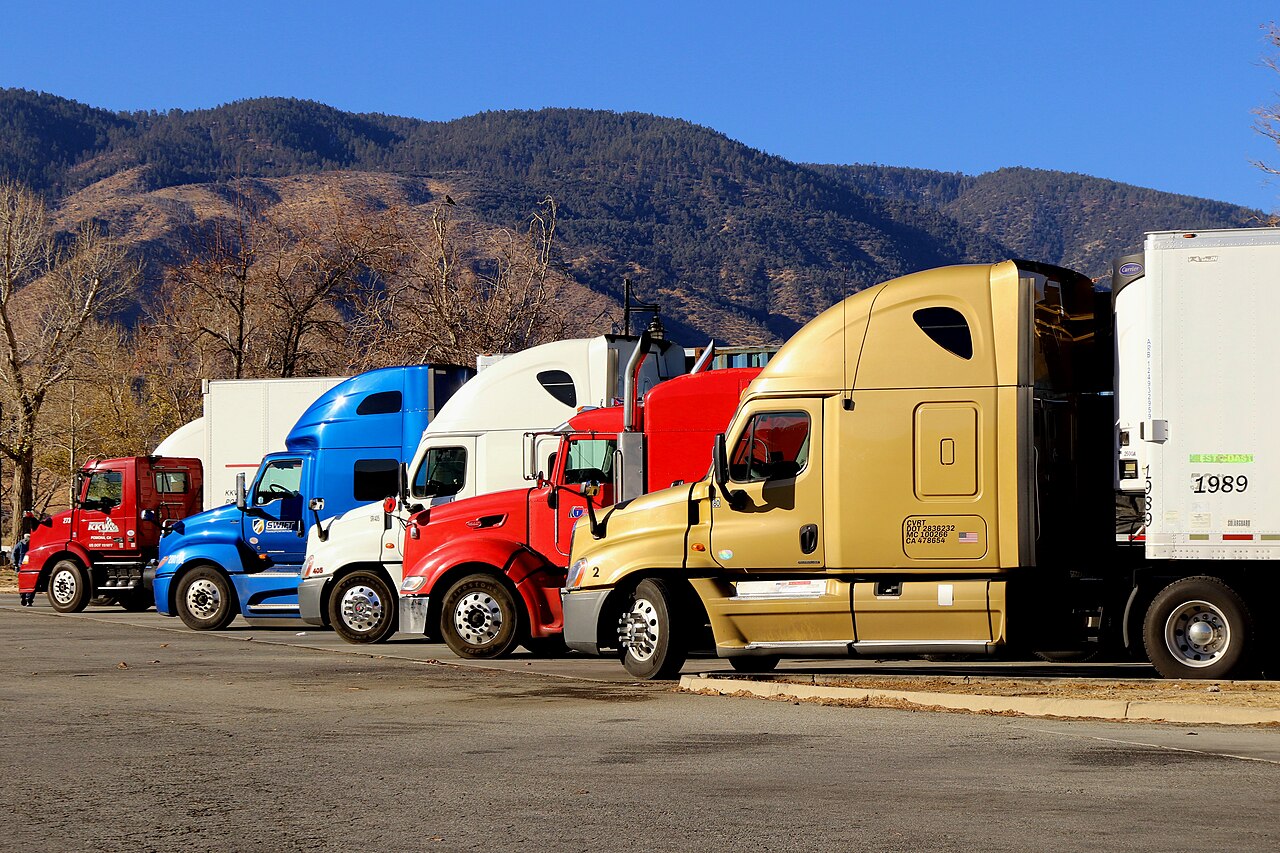
A commercial driver's license (CDL) is required to drive large trucks, buses and certain other heavy vehicles in the United States. The license itself is issued by your state, but the core rules come from the Federal Motor Carrier Safety Administration (FMCSA), part of the U.S. Department of Transportation.
The process has more steps than getting a regular driver's license, and the order matters. This guide explains the license classes, the commercial learner's permit, the federal training requirement that took effect in 2022, the medical exam and the skills test. Your state's CDL manual has the exact details for where you live.
Which class of CDL you need
There are three classes of CDL, based on the vehicle:
| Class | What it covers |
|---|---|
| Class A | Vehicle combinations with a gross combination weight rating of 26,001 pounds or more, where the towed unit is over 10,000 pounds (for example, a tractor-trailer) |
| Class B | A single vehicle of 26,001 pounds or more, such as many straight trucks, dump trucks and buses |
| Class C | Vehicles that don't meet Class A or B but are designed to carry 16 or more people including the driver, or carry placarded hazardous materials |
On top of the class, some jobs need endorsements. Examples include passenger (P), school bus (S), tank vehicle (N), double/triple trailers (T) and hazardous materials (H). Some require only a knowledge test, while passenger and school bus endorsements also require a skills test.
Pick the class and endorsements for the work you want, since they decide which vehicles you may drive. Training once for the right license is easier than upgrading later.
Age and basic eligibility
Federal rules require drivers in interstate commerce, meaning across state lines, to be at least 21 years old. Drivers younger than 21 may be able to drive commercially within their own state, under state rules, but generally cannot drive interstate except through limited federal pilot programs.
You also need a valid regular driver's license. When you apply for a learner's permit, the state checks your driving record for the past 10 years in all states and the District of Columbia. A history of serious violations can delay or block a CDL.
Step 1: The commercial learner's permit (CLP)
The first official step is a commercial learner's permit. To get one, you pass the knowledge tests for the class and endorsements you want, show the documents your state requires and provide proof that you are medically qualified. States charge fees for the permit and tests, and they vary by state.
A CLP lets you practice driving a commercial vehicle on public roads only with a qualified CDL holder seated next to you. Under federal rules, you cannot take the CDL skills test during the first 14 days after your permit is first issued.
Step 2: Entry-Level Driver Training (ELDT)
Since February 7, 2022, federal Entry-Level Driver Training rules have applied to people who:
- get a Class A or Class B CDL for the first time;
- upgrade from Class B to Class A; or
- get a passenger, school bus or hazardous materials endorsement for the first time.
The training must come from a provider listed on FMCSA's Training Provider Registry. It has two parts. Theory training covers subjects such as vehicle systems, hours-of-service rules and safe operation, and you must score at least 80 percent on the theory assessment. Behind-the-wheel training on a range and on public roads, which the hazmat endorsement does not require, must show that you can perform the required skills.
When you finish, the provider reports your completion to the registry electronically. Your state checks the registry before letting you take the skills test. Some states add their own training requirements on top of the federal ones.
The DOT medical exam
Most commercial drivers need a DOT medical examination. It must be done by a medical examiner listed on FMCSA's National Registry of Certified Medical Examiners, which includes certain physicians, physician assistants, advanced practice nurses and chiropractors. A medical certificate is valid for up to 24 months. In most states, the examiner now sends your results to the licensing agency electronically. The examiner may issue it for a shorter period if a condition such as high blood pressure needs monitoring.
If you have a health condition or take regular medication, bring records to the exam.
Step 3: The skills test
Once you have held your CLP for at least 14 days and finished any required training, you can take the CDL skills test. It has three parts:
- Vehicle inspection test — showing that you know how to check that the vehicle is safe to drive.
- Basic controls test — maneuvers such as backing and turning in a controlled area.
- Road test — driving in real traffic with an examiner.
Take the test in the same type of vehicle you plan to drive. If you test in a vehicle without certain equipment, such as air brakes or a manual transmission, your license may carry a restriction.
Comparing training options
CDL training is offered by private truck driving schools, community colleges and some employers. Before you sign up, ask:
- Is the provider listed on the FMCSA Training Provider Registry for the class or endorsement you want?
- How much behind-the-wheel time is included, and how many students share each truck?
- What does the price include: permit and test fees, use of a truck for the test, retests?
- If an employer pays for training, is there a repayment agreement if you leave early? The Consumer Financial Protection Bureau has reported on these "training repayment" provisions in trucking. Read the terms before you sign.
- Is the program approved for workforce funding? Some adults qualify for training help through their local American Job Center under the Workforce Innovation and Opportunity Act (WIOA).
The Bureau of Labor Statistics notes that heavy and tractor-trailer truck drivers usually have a high school diploma and attend a professional truck driving school, and that long-haul work can mean days or weeks away from home.
The bottom line
Getting a CDL follows a set order: choose a class, pass the knowledge tests for a learner's permit, complete Entry-Level Driver Training with a registered provider, keep a valid DOT medical certificate and pass the three-part skills test. States issue the license and may add requirements, so start with your state's CDL manual. Compare training providers carefully and read any contract before you sign.